How to Safely Power Your Home Using a Portable Generator
We walk through a real generator call to explain transfer switches, sub‑panels, and the six‑throw rule so you can power your home safely during an outage.
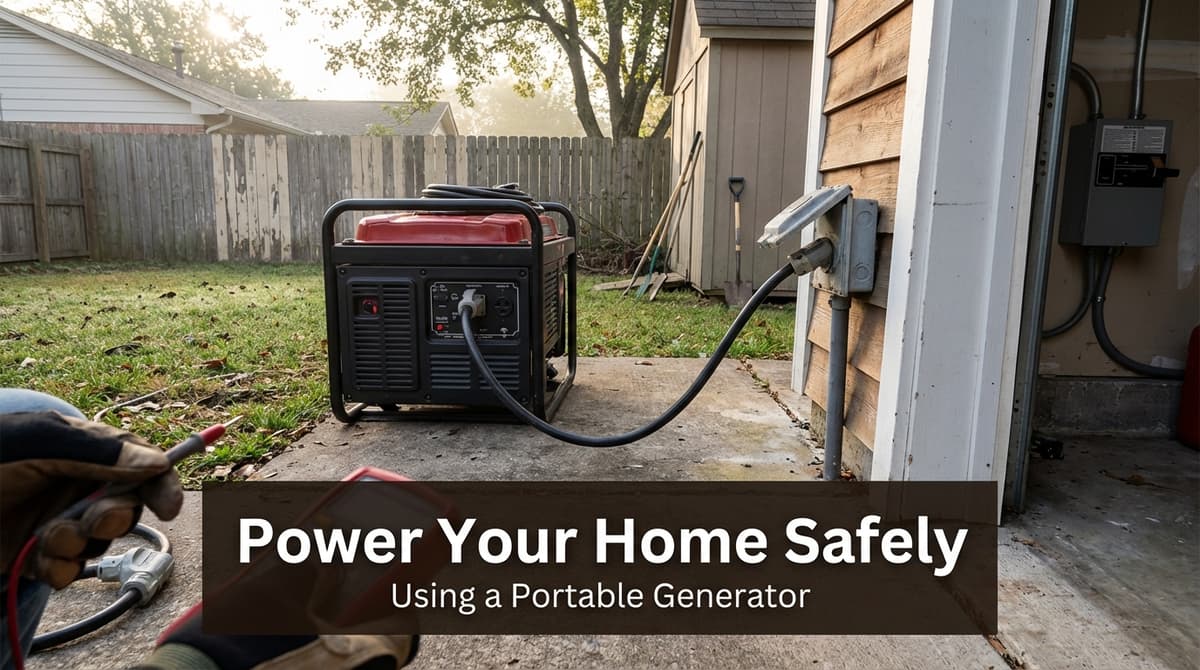
As local electricians, we recently got a call from a homeowner — let’s call him Mark — who wanted to safely power his home with a portable generator. He told us he had two electrical panels, no obvious main shutoff, and he’d been reading about something called the six-throw rule. He was also thinking about upgrading to a portable generator that could tie into his natural gas line so he wouldn’t have to keep refueling with gasoline.
We scheduled a visit to see his setup in person, but the questions Mark asked on the phone are ones we hear all the time. So in this post, we’ll walk through the same explanations we gave him about transfer switches, generator sub‑panels, and the six‑throw rule, and how they all fit together to keep your home safe and code-compliant during an outage.
Two panels, no main shutoff: what’s going on?
When Mark described his system, it sounded very familiar. He had:
- An outdoor panel near the meter with just a handful of breakers (about five).
- An indoor panel in the garage feeding all the general house circuits — lights, receptacles, and most indoor loads.
He’d noticed there was no single main breaker, and he’d read that if you can shut off power using six or fewer breaker “throws,” you don’t need a separate main disconnect. That’s exactly what the six-throw rule is about.
The six-throw rule in plain language
Electrical codes (like the NEC in most areas) require that the service to a home can be shut off quickly in an emergency. The rule says you must be able to disconnect all power using no more than six breaker operations (six throws) at the service equipment.
In Mark’s case, that outdoor panel by the meter had around five breakers. Those likely fed big loads like:
- Well pump
- Furnace or air handler
- Air conditioner
- Water heater
- Possibly the indoor sub‑panel in the garage
Because that entire service could be shut off by flipping those few breakers, he was probably within the six-throw rule, even without a single “main” breaker. That setup can be perfectly legitimate — until you want to bring a generator into the picture.
Why you need a transfer switch or sub‑panel for a generator
When Mark called, his main goal was to plug in a portable generator safely. He did not want extension cords running all over the house, and he definitely did not want to risk backfeeding the utility lines.
This is where a transfer switch or generator sub‑panel comes in. The core idea is simple:
- When utility power is on, your house is fed from the meter like normal.
- When the power goes out, you transfer selected circuits to be fed from the generator instead.
- There must be no way for the generator and utility to energize the house at the same time.
Manual transfer switch vs. generator sub‑panel
For homes like Mark’s, we typically look at two main options:
- Manual transfer switch: This is a device installed near your existing panel. It has interlocked positions so that when the generator is feeding the house, the utility source is mechanically disconnected, and vice versa. You usually get a row of switches that control which circuits can be powered by the generator.
- Generator sub‑panel ("transfer panel"): This is a smaller panel we install and feed through a transfer mechanism. We move selected critical circuits (well pump, fridge, a few lights, maybe a furnace) into this sub‑panel. When you lose power and start the generator, only those circuits are available, which keeps the load within what the generator can safely handle.
With Mark, part of our on-site visit was going to be deciding whether to move some of those outdoor loads (like the well pump and furnaces) to the indoor panel or into a new generator sub‑panel so they could be included in his backup plan.
How the six-throw rule affects generator installations
Here’s the part most homeowners don’t realize: when we add a transfer switch or generator panel, we have to make sure we’re not creating a mess of extra disconnects at the service.
If your outdoor panel is already using up most of those “six throws,” and then we add more disconnecting means for a generator, we may need to:
- Install a new main disconnect feeding both the house and transfer equipment, or
- Upgrade or reconfigure the existing outdoor panel so that the system stays within code.
That’s why we told Mark we really needed to see the panels, labels, and wiring layout in person before promising a particular solution. The right approach depends on how the existing breakers are arranged and how many throws are already required to shut everything down.
Planning your generator: size, fuel, and circuits
Mark mentioned that he already had a portable generator but was considering a different unit that could tie into his natural gas line. That’s a great idea for many homeowners: no hauling fuel cans, no worries about stale gasoline, and often longer runtimes.
When we design a backup system around a portable or portable-style generator, we walk homeowners through three key decisions:
1. What size generator do you really need?
Start by listing what you must have during an outage:
- Water (well pump or booster pump)
- Heat source (furnace or boiler controls, possibly a blower)
- Refrigerator and freezer
- A few lighting circuits and key outlets
- Maybe the microwave or a small cooktop
We compare that list to the generator’s running and starting wattage. Larger loads like central AC or electric water heaters might have to stay off a smaller portable generator. In Mark’s case, we told him we’d see if we could reasonably include his well pump and furnace on the generator panel, then decide what to leave out.
2. Gas, propane, or dual-fuel?
If you’re thinking about tying a portable-style unit into your natural gas or propane system, a few points are critical:
- The generator must be rated and configured for that fuel.
- A licensed professional should run and size the gas line.
- The unit still has to be installed outdoors, in a safe, well-ventilated spot, away from windows and doors.
We always remind homeowners: never run a generator in a garage, even with the door open. Carbon monoxide is deadly and can seep into the house quickly.
3. Which circuits go on the generator?
Once we understand the generator size and fuel setup, we help you choose which circuits to put on the transfer switch or sub‑panel. It’s usually a mix of:
- Water and heat (or cooling in hot climates)
- Kitchen essentials
- Some lighting and outlets in main living areas and bedrooms
In a home like Mark’s, that often means pulling key circuits from both the outdoor panel (well pump, furnace, maybe AC) and the indoor panel, then reorganizing them so they can be safely served by the generator without tripping breakers or overloading the unit.
How we recommend you move forward
If your setup sounds anything like Mark’s — two panels, no obvious main shutoff, and questions about the six-throw rule — here’s the safe path forward:
- Have a licensed electrician inspect your panels. We’ll verify how many throws it takes to shut off the entire service and whether you have a compliant main disconnect arrangement.
- Discuss your generator options. Bring the generator’s model number if you already have one, or tell us what you’re considering (portable, natural gas, dual-fuel, etc.).
- Design a transfer solution. Together we’ll decide whether a manual transfer switch, interlock, or generator sub‑panel is best for your home and budget.
- Choose your critical circuits. We’ll help you prioritize what really needs backup and make sure your generator can handle it.
Done right, a portable generator with a proper transfer setup gives you peace of mind without breaking code or risking anyone’s safety. That’s exactly what we’re working on for Mark, and it’s the same approach we’d take at your home too.