Can I Add an Outdoor Outlet to an Existing Light Circuit?
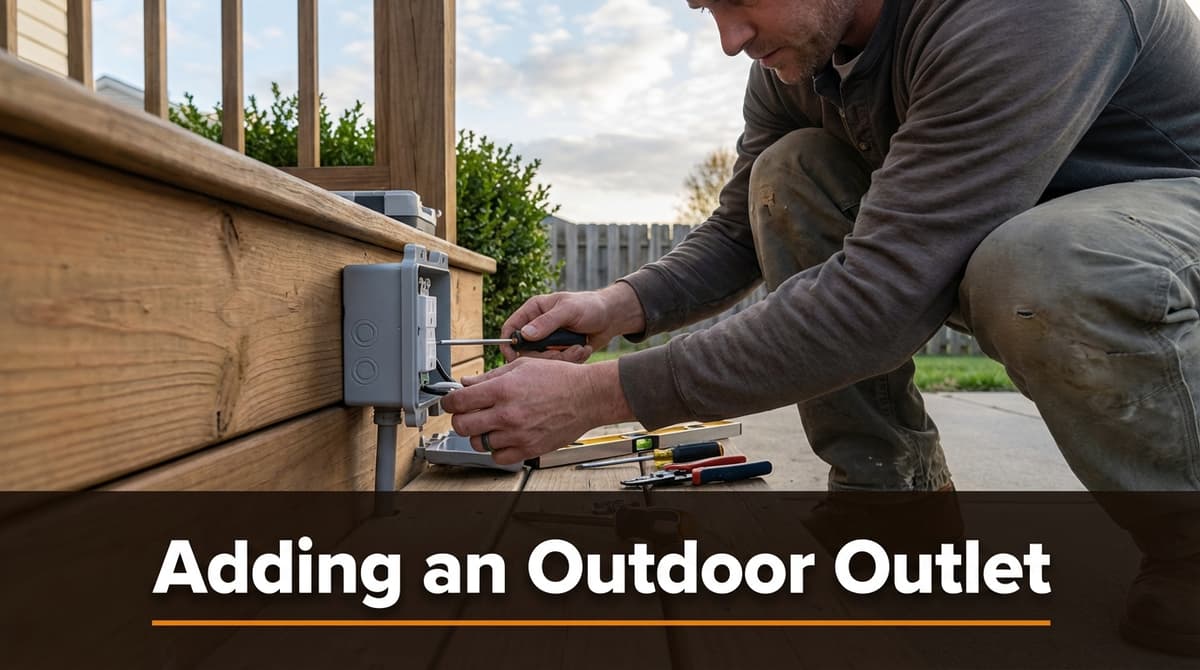
Thinking about adding an outdoor outlet to an existing light circuit? Here’s how to do it safely, meet code, and avoid breaker trips and shock hazards.
Why This Question Comes Up So Often
We recently got a call from a homeowner — let’s call her Lisa — right here in our own neighborhood. She told me, “I’ve got a floodlight that needs to be replaced, and I’d really like to add an outdoor receptacle.” As we talked, she mentioned a pull-string light under the house and wondered if we could just “tap into that” and run an outlet to the side of the home, maybe 10 feet away.
Lisa mainly wanted the outlet for accent lighting and future holiday decorations, and she already had a new floodlight ready to install because the old one was buzzing and flickering. Her big question: “Can you just add an outdoor outlet to that existing light circuit?”
This is something we’re asked all the time, so I walked her through the safety concerns, code requirements, and best practices. Let me share that same guidance with you.
Can You Add an Outdoor Outlet to a Light Circuit?
The short answer is: sometimes, but only if it’s done safely and to code. In Lisa’s case, there was a light in the crawl space we could potentially use for power, but I told her the first thing we’d need to do is see what else was already on that circuit.
If we simply tie an outlet into a light circuit without checking the load, you might plug in a few strings of lights, a pressure washer, or a hedge trimmer and suddenly the breaker is tripping every time you turn something on. That’s inconvenient at best — and a sign the circuit may be overloaded.
So before we add any receptacle, we:
- Identify which breaker controls that circuit
- See what other lights and outlets are already connected
- Calculate the expected load based on how you plan to use the new outlet
Key Electrical Code Requirements for Exterior Receptacles
National Electrical Code (NEC) rules are updated regularly, and most local jurisdictions follow them closely. When Lisa asked about tying into that crawl-space light, I explained that we also needed to think about code, not just convenience.
Here are some of the big requirements we consider when adding an outdoor outlet:
- GFCI protection: Exterior outlets must be GFCI-protected to guard against shock, especially around moisture.
- Weather-resistant devices: We use WR-rated (weather resistant) receptacles designed for outdoor conditions.
- In-use (bubble) covers: Modern code generally requires covers that protect the plug and cord while in use, not just when the outlet is empty.
- Proper box and support: The outlet box must be rated for exterior use and securely mounted to the structure.
- Cable type and routing: Any wiring exposed to the elements or in a crawl space has to be the correct type, properly protected and secured.
Skipping any of these might “work” for a while, but it can lead to nuisance tripping, corrosion, and, in the worst case, electrical shock or fire hazards.
GFCI, Weather Protection, and Safety
When Lisa mentioned using the outlet for accent lighting, she assumed it would be a very light load — and usually that’s true. But I always design exterior receptacles with the assumption that one day someone might plug in something heavier: a leaf blower, a shop vac, or a pressure washer.
That’s why we always install:
- GFCI protection either at the outlet itself or upstream on the circuit
- Weather-resistant receptacles that can handle humidity and temperature changes
- In-use covers that keep water out even while cords are plugged in
If your existing light circuit isn’t already GFCI-protected, we typically install a GFCI outlet or a GFCI breaker as part of the upgrade. That step alone is a major safety upgrade for any outdoor circuit.
When It’s Better to Run a New Circuit
In some homes, the existing light circuits are already pretty full. Maybe there are several fixtures, a bathroom fan, or even other receptacles tied in. In those cases, adding one more thing — even “just some Christmas lights” — can push the circuit too close to its limit.
Here are a few signs we may recommend a dedicated new circuit instead of tapping into a light:
- The breaker is already a 15A circuit with several lights and outlets
- You plan to plug in power tools or heavier outdoor equipment
- The wiring feeding the existing light is older or undersized
- You’ve had nuisance tripping on that breaker in the past
A dedicated outdoor circuit gives you more flexibility and reliability. You can decorate for the holidays, power your tools, and run accent lighting without worrying about your porch light suddenly going out or the breaker constantly tripping.
Permits, Inspections, and Doing It the Right Way
Another thing I often explain, and mentioned to Lisa, is that even a “small” project like adding an exterior outlet can fall under local permitting and inspection requirements. It’s not just bureaucracy — it’s an extra safety check.
Depending on your area, your city or parish may require:
- An electrical permit for adding or extending a circuit
- An inspection to verify proper GFCI protection and weatherproofing
- Verification that the breaker size and wire size match the load
As licensed electricians, we handle the permitting and schedule inspections when needed, so you don’t have to guess what’s required or worry if it was done correctly.
Planning Outdoor Outlet Locations Around Your Home
When we were talking through Lisa’s project, her main focus was one new outlet near her accent lighting. While we were there, we also looked at the rest of her yard to see if there were better spots for future use — for example, holiday lights in front, a fountain by the walkway, or a future patio TV.
When you’re planning exterior receptacles, it helps to think a few years ahead. Ask yourself:
- Where do I usually plug in holiday lights?
- Do I ever run extension cords across walkways or the yard?
- Am I planning a deck, patio, or outdoor kitchen later?
Sometimes, adding one or two extra outlets while we’re already running cable costs less in the long run than having us come back and open everything up again later.
What We Did for This Homeowner
For Lisa, we inspected the crawl-space light circuit, checked what else was on that breaker, and evaluated her future plans. In her case, the load was modest and the wiring was in good condition, so we had safe options to work with.
We replaced the buzzing, flickering floodlight with the new fixture she had purchased, then carefully designed the best way to add her outdoor receptacle with proper GFCI protection, a weather-resistant device, and an in-use cover. We also made sure the wiring route and junctions met code inside the crawl space.
If you’re wondering whether you can add an outdoor outlet to an existing light circuit, the safest path is to have a licensed electrician look at the whole picture — the circuit load, the wiring, the code requirements, and how you plan to use that outlet in real life. Done right, it’s a simple upgrade that makes your outdoor spaces far more usable and a lot safer.