Why Multiple Light Fixtures Stop Working at Once
Multiple light fixtures quitting at once usually isn’t a bulb problem. Learn the hidden wiring issues behind it and when it’s time to call an electrician.
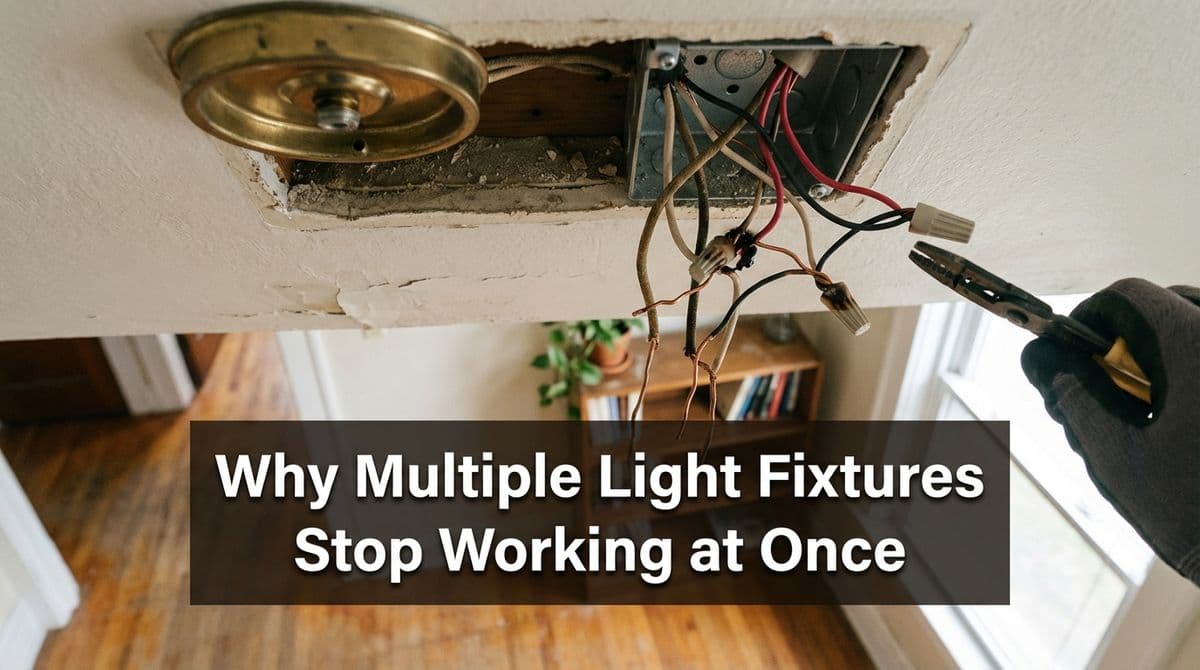
Why Do Several Light Fixtures Quit at Once?
We recently got a call from a homeowner — let’s call him Mark — who was more than a little frustrated. Several of his light fixtures had suddenly stopped working around the same time. He’d already tried replacing the switches and the bulbs, but the problem kept coming back.
In his bathroom, the fan still worked fine, but the light on the same switch box was dead. In the kitchen, a main light was flickering after he put in a new switch, and the small light over the sink had gone out completely. All of these switches were grouped together, yet only some of them were acting up.
By the time he called us, he’d spent money on parts and a lot of time troubleshooting, with no real fix. That kind of situation is exactly why we offer diagnostic visits — sometimes the issue is hiding behind the switches and fixtures, not in them.
When It’s Not the Bulb or the Switch
From what Mark described, we knew right away this probably wasn’t a simple “bad bulb” or “bad switch” situation. Here’s what made us think that — and what you can look for in your own home:
- Multiple lights on the same box misbehaving (some working, some not)
- Newer fixtures suddenly failing for no obvious reason
- Flickering after replacing a switch instead of clearing up the problem
- Fans or other devices on the same box still working while certain lights don’t
When you see this mix of symptoms, it usually points away from the obvious (bulbs and switches) and toward what’s happening behind the wall: connections, wiring, or the way the circuits were originally put together.
Common Hidden Causes of Multiple Lights Failing
Every home is different, but when several fixtures stop working or start flickering around the same time, we tend to find one of a handful of issues:
1. Loose or Backstabbed Connections in the Box
This is the first thing we check when we “open up the boxes,” like we told Mark we’d do. Over time, wires can loosen from their terminals or from the back of a switch or receptacle (sometimes called “backstab” connections). A loose connection can cause:
- Intermittent power to lights (flickering)
- Heat buildup at the connection point
- One switch in a group failing while others still work
Because grouped switches often share power feeds and neutrals, a single bad connection can knock out multiple lights in different rooms.
2. Shared Neutrals and Daisy-Chained Fixtures
Electricians sometimes “daisy chain” fixtures, meaning power runs from one to the next. Or they may run several switches off a shared neutral wire. If that neutral becomes loose or damaged, you can lose multiple fixtures at once, even if their individual switches and bulbs are fine.
This often shows up as:
- One light failing, followed later by another on the same circuit
- Strange behavior when you flip one switch (another light flickers)
- Lights that work sometimes and then go completely dead
3. Aging or Damaged Wiring
In older homes, the insulation on wiring can become brittle, or connections in junction boxes (often hidden in attics or ceilings) can deteriorate. Even in newer homes, a staple driven too tight or a wire nicked during construction can cause problems years later.
When several fixtures in related areas quit at once, we may need to trace wiring runs between them to find the weak link.
4. Overloaded or Poorly Done DIY Work
Sometimes a previous owner tried to “add just one more light” or swap fixtures without fully understanding how the circuit was wired. That can leave you with:
- Too many connections crammed into one box
- Wrong type of device or connector used
- Improperly tied neutrals or grounds
These issues may work for a while, then suddenly show up as failures when a new fixture is added or a switch is replaced — exactly what Mark experienced after changing out his switches.
What You Can Safely Check Yourself
If you’re comfortable doing a few basic checks, there are some things you can look at before calling an electrician. Always put safety first:
- Check the breakers: Make sure no breakers are tripped or partially tripped. Flip them firmly off and back on if needed.
- Try different bulbs: Especially if you’re using dimmable switches with LED bulbs, make sure the bulbs are rated as dimmable and compatible.
- Test nearby outlets: If outlets on the same wall or room are dead or flickering, it points to a circuit-level issue, not just a switch.
If you ever smell burning, see scorch marks around switches, or feel warmth at the switch plate, stop and call a professional immediately.
When to Call an Electrician
With Mark, we quoted an hourly diagnostic rate because we suspected a straightforward fix: open the boxes, test for power, tighten or remake connections, and verify everything is safely wired. In many cases like his, we can track down the problem and repair it in under a couple of hours.
You should bring in a licensed electrician if:
- Multiple fixtures stopped working around the same time
- New switches or bulbs haven’t solved the problem
- Lights flicker or dim unpredictably
- Only some switches in a multi-gang box work properly
- You’re not comfortable safely testing wiring and connections
Don’t Ignore the Warning Signs
When several lights go out at once, it’s more than just an inconvenience — it can be an early warning that something isn’t right in your electrical system. Catching loose connections or wiring issues now can prevent bigger problems down the road.
If your home is doing what Mark’s was doing — lights failing, flickering, or only some switches working in a box — we’re happy to come out, open things up, and track down what’s really going on behind the wall. Sometimes the fix is simple, but the peace of mind of knowing it’s also safe is worth the call.