HOA Entrance Sign Electrical Code & Lighting Upgrades
HOA entrance sign lights not up to code? Learn common safety and grounding issues with monument lighting plus smart upgrade options for your neighborhood.
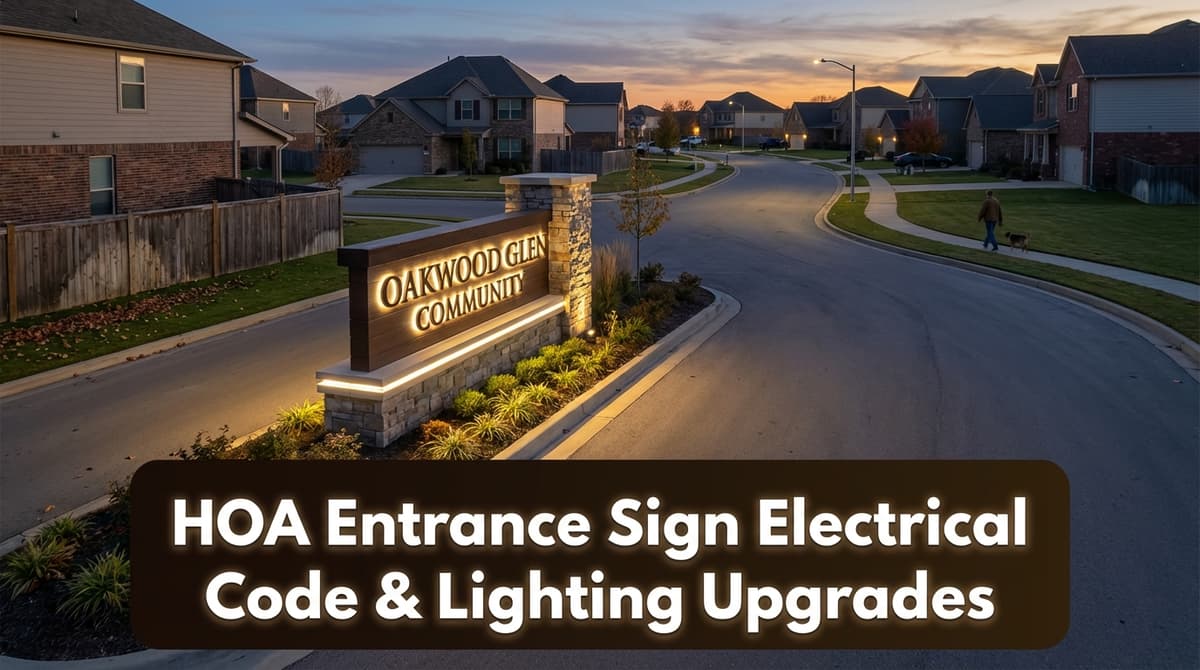
When Your Neighborhood Entrance Lights Aren’t “To Code”
We recently got a call from a homeowners association president — let’s call him Tom — who lives in a subdivision with two entrance signs on either side of the main road. Tom had a neighbor who “knows quite a bit about electrical” take a look at their monument sign lighting, and the verdict wasn’t great: the grounds weren’t correct and things looked out of code.
On top of that, the neighborhood wanted to improve the lighting to better illuminate their name at night. So Tom’s question for us was simple: could we come out, make it safe and code-compliant, and then talk through upgrade options that would make the entrance look great without causing headaches down the road?
If you’re on an HOA board or you own a home with a shared entrance sign, you might be wondering the same thing. Let’s walk through the most common electrical code issues we find with neighborhood entrance signs and monument lighting — and how we typically fix and upgrade them.
Why Entrance Sign Electricals Often End Up Out of Code
By the time we get called, entrance signs have usually been through a lot: original construction, a few “band-aid” repairs, maybe a DIY project or two by a well-meaning neighbor. Over the years, small shortcuts add up to code violations and safety risks.
When we meet someone like Tom on site, here are the first problem areas we look for:
- Improper or missing grounding on lights, junction boxes, and circuits
- Non-weatherproof boxes or open splices buried in mulch or soil
- Damaged or undersized wiring, often from lawn equipment or age
- No GFCI protection where it’s required outdoors
- Old timers or photocells that fail and get bypassed incorrectly
Individually, these might seem minor. Together, they can be enough to fail an inspection — or worse, create a shock or fire hazard around a spot where kids, pets, and guests walk every day.
Grounding: The Issue We See Most Often
Tom specifically mentioned that his neighbor said the grounds were not correct. That’s one of the most common and serious problems we find on entrance signs.
Proper grounding does two big jobs:
- Protects people by giving fault current a safe path back to the panel so breakers trip quickly.
- Protects equipment from surges and stray voltages that can shorten the life of fixtures and controls.
On a typical HOA monument sign, we often find:
- Metal light fixtures with no ground connection at all
- Ground wires cut short or left disconnected in a box
- Ground rods installed but not bonded correctly to the system
Our fix is straightforward but detailed: we trace the circuit back to the source, verify continuous grounding, correct any loose or missing bonds, and replace corroded or undersized components with ones that meet current code.
Common Code Problems Around HOA Entrance Lighting
Grounding is just one piece of the puzzle. When we schedule a visit like the one with Tom, we plan time to inspect and test the entire lighting system end to end. Here are other issues we commonly uncover:
1. Exposed or Improperly Buried Wiring
Landscape crews, erosion, and time can bring once-buried cables to the surface. We often find:
- UF cable not buried deep enough
- Broken conduit with wires exposed
- Splices wrapped in tape and buried in dirt or mulch
To correct this, we use listed underground splice kits, proper conduit, and code-compliant burial depths so the system is safe and protected for the long term.
2. Missing GFCI Protection
Outdoor circuits are generally required to be GFCI protected. On monument signs, we still find older setups with standard breakers and no GFCI devices, which means higher shock risk if something goes wrong in a wet area.
We usually correct this by adding a GFCI breaker in the panel or a GFCI device at the first outlet or junction, depending on the layout and current code requirements.
3. Non-Weatherproof Boxes and Fixtures
We regularly see interior-rated boxes or fixtures used outdoors, covers missing, or in-use covers that do not close properly around cords and photocells. Any of these can allow moisture into live electrical parts.
During a visit, we replace those with weatherproof boxes, covers, and fixtures that are rated for damp or wet locations and seal penetrations to keep water out.
Upgrade Options: Making Entrance Signs Look Great and Run Better
Tom’s HOA, like many, did not just want a “bare minimum” code fix; they wanted their entrance to really stand out at night. Once we confirm everything is safe and compliant, we talk through upgrade options that can reduce maintenance and power usage.
LED Lighting for Signs and Monuments
We often recommend upgrading old halogen or incandescent fixtures to LED sign and landscape lights. Benefits include:
- Much lower energy usage
- Longer lamp and fixture life
- Cleaner, more even illumination on the sign face
In some cases, we also adjust beam spread and placement so the neighborhood name is evenly lit without hot spots or glare into drivers’ eyes.
Better Controls: Timers, Photocells, and Smart Options
Another popular upgrade is replacing old, finicky timers with more reliable controls. Depending on the HOA’s comfort level, we can install:
- Simple, accurate astronomical timers that follow sunrise and sunset
- Photocell controls so lights respond automatically to changing light levels
- Smart controls that HOA board members can adjust from a phone
This cuts down on nuisance calls about “the sign lights are out again” and helps keep operating costs predictable.
What HOAs and Homeowners Should Do Next
If you suspect your neighborhood entrance sign is not up to code — maybe a neighbor like Tom’s has taken a look, or lights keep failing — it is worth having a licensed electrician inspect the system.
Here is what we suggest:
- Do not rely on DIY fixes for grounding or underground wiring.
- Schedule a site visit so we can meet you at the entrance, walk the layout, and test the circuits properly.
- Discuss both safety corrections and upgrade options at the same time so you do not pay twice for the same work area.
That is exactly how we handled Tom’s call: meet at the entrance, troubleshoot, correct the grounding and code issues, then design a lighting upgrade that made the neighborhood sign something residents were proud to drive past every evening.
If your HOA entrance or monument lighting has you wondering about safety, grounding, or code compliance, we are happy to take a look and help you plan both fixes and upgrades that will last.