Why Your Oven Keeps Tripping the Circuit Breaker
Oven keeps tripping your breaker? Learn how we diagnose whether the problem is the outlet, the breaker, or the oven itself — and what homeowners should and shouldn’t do.
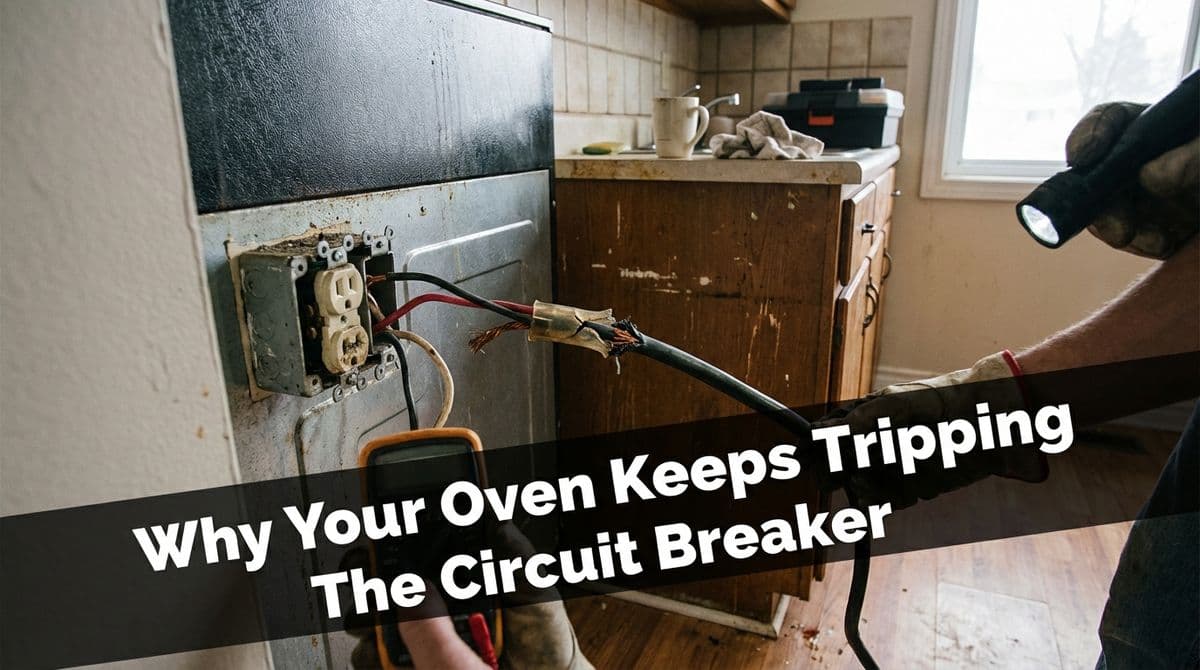
When Your Oven Keeps Killing the Power
We recently got a call from a homeowner — let’s call her Kelly — who was pretty frustrated with her oven. Every time she tried to bake dinner, the oven would run for a bit, then click — the circuit breaker would trip and half the kitchen would go dark.
She’d already had an appliance repair technician out. He checked the oven and told her, “Everything looks fine on the appliance side. You should have an electrician check the circuit breaker to rule that out.” That’s when she reached out to us.
As we told Kelly on the phone, this is something we see all the time. Sometimes it really is the breaker, but just as often it’s the outlet or the wiring behind the oven — and occasionally the oven still turns out to be the culprit even if it passed an initial check.
How We Approach an Oven That Trips the Breaker
When we schedule this kind of call, we explain our game plan up front, just like we did with Kelly:
- Step 1: Safely run the oven and see how and when the breaker trips.
- Step 2: Inspect and test the outlet and wiring behind the oven.
- Step 3: Test and evaluate the breaker itself in the panel.
We move in that order because it tells us a lot. If the breaker trips instantly when the oven starts heating, that points one direction. If it takes 10–15 minutes of run time before it trips, that points another way, like overheating in the outlet or a weak breaker.
Why We Don’t Assume “It’s the Breaker”
Homeowners understandably focus on the breaker because that’s the part they see and reset. But the breaker is really just the messenger telling you something is wrong on the circuit.
With ovens, we commonly find:
- Loose or burned connections at the outlet (or range receptacle).
- Overheated outlet or wiring from years of high current draw.
- Aging breaker that has gotten too sensitive and trips early.
- Internal oven issues like a failing heating element or control board.
In Kelly’s case, the appliance tech had already said the oven “looked fine,” but even he noted that if it wasn’t the breaker, it could still be the control board. That’s why we always methodically check each part of the electrical path.
Outlet vs. Breaker vs. Appliance: How We Tell the Difference
1. What the Breaker Can Tell Us
The first thing we look at is the breaker size and type. Most electric ovens should be on a dedicated 240V circuit, often 30–50 amps, depending on the model. If the breaker is undersized or mismatched, it may be tripping simply because the oven’s normal power draw is too high for that breaker.
We also look for signs of age and damage:
- Does the breaker feel loose in the panel?
- Is there any sign of discoloration, heat, or burning around it?
- Does it trip with very little load or feel spongy when switched?
If we suspect a weak breaker, we can test and replace it with one that matches the panel manufacturer and the proper rating. That’s why, when scheduling, we often ask homeowners to text us a picture of the panel and breaker so we can try to bring the right part and avoid extra trips.
2. Checking the Outlet and Wiring
The outlet behind an oven works hard. Over years of heating cycles, connections can loosen slightly. That creates resistance, which creates heat, which can lead to:
- Melted or darkened plastic around the outlet.
- Burned or brittle insulation on the wires.
- A hot or humming outlet when the oven is on.
We carefully pull the range out, shut off the breaker, and open up the outlet box to inspect and test. Sometimes everything looks okay visually, but our meters tell us otherwise — a bad connection or failing outlet can absolutely cause a breaker to trip under load.
3. When It’s Actually the Oven
Even if another technician has given the oven a clean bill of health, we don’t rule it out entirely. A failing heating element, control board, or internal short may only show up under certain conditions — like when the oven hits a specific temperature or uses a specific element.
If the outlet and breaker both test good, and the oven still trips the circuit at certain settings, that’s when we circle back with the homeowner and recommend a deeper appliance diagnosis.
What You Can Safely Check Before You Call
There are a few simple, safe checks homeowners can make before calling an electrician. We walked through these with Kelly on the phone as well.
1. How to Safely Reset the Breaker
- Turn the oven off at its controls.
- Go to your electrical panel and locate the tripped breaker (it will be in the middle or “off” position).
- Firmly push the breaker all the way to OFF.
- Then push it back to ON until it clicks in place.
If it trips again immediately when you turn the oven on, stop there. That’s a sign something needs professional attention.
2. Look, Don’t Touch
Without moving the oven or opening anything up, you can:
- Listen for buzzing or crackling at the panel when the oven runs.
- Notice if the breaker or panel cover feels hot to the touch (slightly warm is normal, hot is not).
- Check whether other appliances on the same circuit (if any) are running when it trips.
Share these observations with your electrician — they help us narrow down where the problem is.
What You Should Not Do Yourself
We always want homeowners to stay safe. For oven and breaker issues, here’s what we strongly recommend not doing on your own:
- Don’t open the electrical panel or try to replace the breaker yourself.
- Don’t pull the oven out and unplug or rewire it unless you know how to safely shut off power.
- Don’t tape the breaker on or keep resetting it over and over. A tripping breaker is a safety device doing its job.
- Don’t swap breakers around from other slots in the panel “just to test.” They may not be compatible or correctly rated.
We know it’s tempting to troubleshoot everything with a YouTube video, but with 240V oven circuits, a wrong move can be dangerous.
When to Call an Electrician (and What to Expect)
If your oven keeps tripping the breaker more than once, especially if it happens quickly or only on certain settings, it’s time to bring in a pro. When homeowners like Kelly call us, we typically:
- Ask a few questions about how long the oven runs before tripping.
- Request a photo of the panel and breaker so we can bring the right parts.
- Schedule a visit and explain our service call rate and expected time.
- Walk you through what we’ll test: oven load, outlet, wiring, and breaker.
Most of these issues can be diagnosed — and often fixed — within the first hour. In some cases, we’ll replace a failing breaker on the spot. In others, we’ll repair or replace a damaged outlet. If everything on the electrical side checks out, we’ll give you clear documentation to share with your appliance tech.
Bottom Line: Don’t Ignore a Tripping Oven Breaker
A breaker that keeps tripping around your oven isn’t just an annoyance; it’s a warning sign. Whether it’s the outlet, the breaker, or the appliance itself, something is drawing more power or creating more heat than it should.
If your oven has been “on the fritz” and keeps knocking out the circuit, reach out to a licensed electrician. We’ll walk through the same careful process we used with Kelly — starting at the panel, checking the outlet and wiring, and working our way to the oven — so you can get back to cooking without worrying about the lights going out.