How to Split Electric Service for Shared Well Pumps
Sharing a well pump between lots but not the electric bill? Learn safe, code-compliant ways to split electric service and fairly bill multiple tenants or lots.
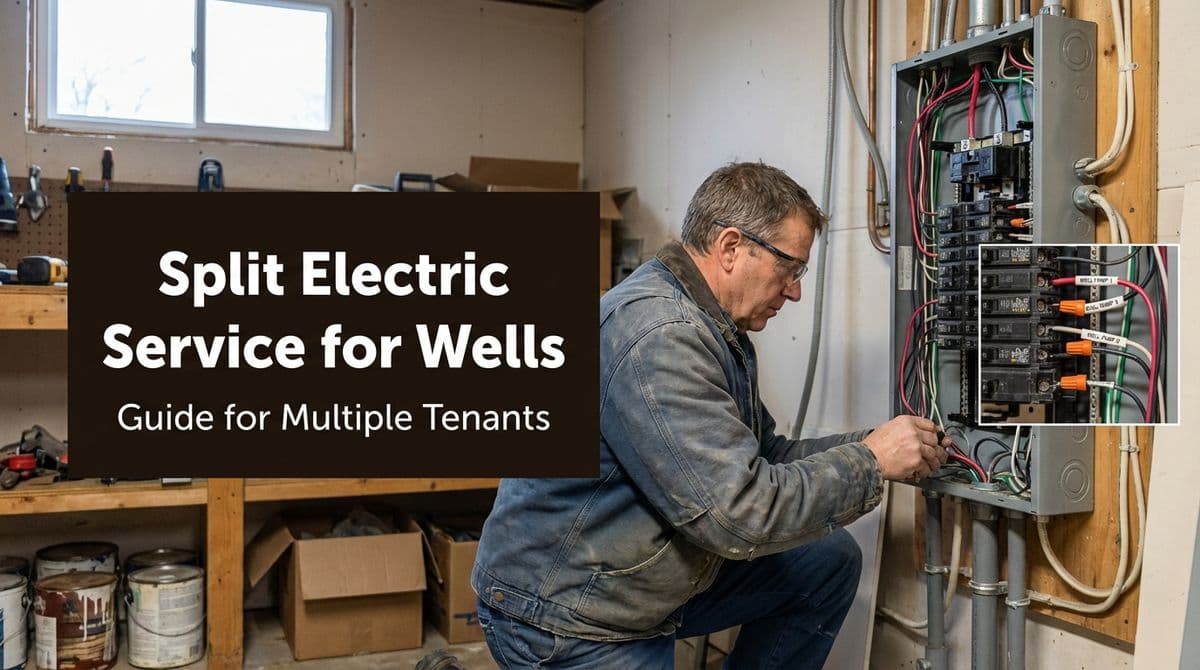
When Two Lots Share One Well Pump (But Need Fair Electric Bills)
We recently got a call from a customer — let’s call him Brian — who was juggling a tricky situation with a family property. There were two mobile homes on two separate lots sharing a single well pump. One tenant on Lot A had been paying the whole electric bill for the well for years, while the tenant on Lot B benefitted from the same water without ever seeing that cost on their bill.
Brian had talked to the power company, and they suggested he have an electrician install two meter bases for the well so each lot could pay its fair share of the pump’s electricity. That’s when he reached out to us to ask, “How do we properly split electric service for a shared well pump?”
We see this kind of setup more often than you might think — especially with shared driveways, family land, or small rental properties. So we walked Brian through his options, and we’ll walk you through them here too.
First Step: Understand What You Have Now
Before anyone starts adding meters or pulling wire, we always begin where we started with Brian: by figuring out how the well and power are currently set up.
On a typical shared well system, you might see one of these layouts:
- One existing power meter that feeds both the well pump and one of the homes.
- One dedicated well meter that only feeds the pump, and both homes have their own separate house meters.
- Older or DIY wiring where the pump is fed from one of the home panels with no clear labeling or documentation.
In Brian’s case, there was a single meter on the property, and that meter likely fed the pump and at least one of the trailers. Because he had recently taken over the property from his elderly dad, the exact wiring history was unclear. That’s actually very common, and it’s why an on-site inspection is essential.
Why You Can’t Just “Split the Wire”
One of the biggest misconceptions we run into is the idea that we can simply “tee off” the existing pump circuit and run it through two meters. Unfortunately, electric service doesn’t work that way.
Here’s why we don’t just splice into the pump feed:
- Code compliance – The National Electrical Code (NEC) has strict rules about how service conductors, feeders, and branch circuits are installed and protected.
- Safety and liability – Improperly splitting a circuit can create overloads, nuisance tripping, and even fire hazards.
- Utility requirements – Power companies only meter and energize equipment that meets their specifications and local code. A DIY split won’t pass inspection or get hooked up.
So instead of “sharing a wire,” we look at how to properly reconfigure the service so the well pump is supplied and metered in a clean, code-compliant way.
Three Common Options for Shared Well Pump Billing
When we talk with homeowners like Brian, we usually walk through three main approaches. The right one depends on your layout, budget, and your utility’s rules.
Option 1: One Dedicated Well Meter + Cost-Sharing Agreement
In this setup, the well pump has its own dedicated meter, separate from either tenant’s house meter. One person (often the property owner) pays that bill and then splits the cost between tenants by agreement.
Pros:
- Electrically simple and usually the least expensive to retrofit.
- Clear separation between house usage and well usage.
- Easy to service and troubleshoot the well circuit.
Cons:
- Requires trust and/or clear language in leases to handle billing.
- Tenants don’t see the well cost directly on their own utility bill.
This is often where we start the conversation if the goal is fairness but the layout doesn’t lend itself to multiple pump meters.
Option 2: Two House Meters + Sub-Meter or Allocation
If each home already has its own meter or will have one installed, we can leave the pump on one service and then use a sub-meter or allocation method to bill the second lot.
Common approaches include:
- Private sub-meter that tracks how much energy the pump uses over time.
- Flat monthly fee built into rent based on average use.
- Percent split (e.g., 50/50) added to each tenant’s rent or separate statement.
Pros: No need to involve the utility with extra meters in many cases, and can be cost-effective.
Cons: Still relies on agreements and record-keeping rather than each tenant having a direct utility relationship for the well.
Option 3: Rebuild the Service With Multiple Utility Meters
This is the route Brian’s utility suggested: installing two meter bases so each lot could be billed separately for well usage. In practice, what that means depends heavily on the power company’s policies.
In a more involved rebuild, we might:
- Install a meter stack or multiple meter bases on a service pole or pedestal.
- Run separate feeders from each meter to either each home, or to a pair of disconnects controlling their share of the well system (for example, separate booster pumps or pressure tanks).
- Coordinate with the utility so they know exactly what each meter is serving.
This option can get complex, because a single physical pump motor can’t be powered by two meters at the same time. If the goal is literally one pump with two separate power sources, that’s not allowed. Instead, we look at designs where:
- The well pump is on one dedicated meter, and each tenant has their own house meter; or
- The water system is reconfigured (for example, separate pressure systems) so electrical loads can be split logically.
For Brian, the first step is for us to visit the site, verify where the existing meter feeds go, and then speak directly with the utility’s representative to see what they will allow.
Safety, Code, and Utility Coordination
Anytime we touch service equipment, there are three main groups of rules we must satisfy:
- Electrical code (NEC and local amendments) – Conductor sizes, breaker ratings, grounding, disconnect locations, etc.
- Utility standards – Meter base type, height, location, and how many meters they will allow on a pole or structure.
- Local inspections – The final sign-off that the work is safe and legal.
With shared wells, we also pay close attention to:
- Proper disconnecting means near the well equipment.
- Correct grounding and bonding of the well casing and equipment.
- Weatherproofing and protection of any outdoor panels or disconnects.
This is why we told Brian the same thing we tell anyone in his shoes: before talking numbers, we need to see what’s in place and line up with the power company so everyone is on the same page.
Real-World Configuration Example
To make this more concrete, here’s a common configuration we end up with on properties like Brian’s:
- Install a new service pole or upgrade the existing one.
- Mount a meter stack with three positions: one for Lot A house, one for Lot B house, and one for the well pump.
- Run feeders from each meter to its respective panel: two go to the home panels, one goes to a small outdoor pump panel near the well.
- The utility energizes all three meters, and each account is set up according to the owner’s and tenants’ needs.
In that setup, the well becomes almost like a “third customer” from the utility’s perspective, making the billing clear and simple. The owner can decide whether one tenant, both tenants, or the owner pays that bill.
Quick FAQ: Shared Wells and Electric Billing
Can two tenants be billed separately for one well pump?
Not directly from one motor with two utility meters feeding it. Instead, you use either a dedicated well meter plus cost-sharing, or legal/lease agreements based on sub-metering or allocations.
Is it legal for one tenant to pay the whole well bill?
Yes, as long as it’s agreed to in the lease. The issue is usually fairness, not legality. Many owners, like Brian, want a more equitable setup long-term.
Do I need the power company involved?
Yes, if you are adding or moving meters or changing service equipment. We typically coordinate directly with the utility contact, just like we offered to do for Brian.
Thinking About Splitting Service for Your Shared Well?
If you’re in a similar situation — multiple lots or tenants sharing one well pump and one electric bill — the best starting point is a site visit. We can document your existing setup, talk with your power company if needed, and lay out practical options that are safe, code-compliant, and fair to everyone using the water.
That’s exactly what we’re doing for Brian’s family property, and it’s a process we’re happy to walk you through step by step.