Why Your Fluorescent Light Still Won’t Work After New Bulbs
Changed the bulbs and your fluorescent ceiling light still won’t work? Learn the real reasons these fixtures fail and how to know when the ballast is to blame.
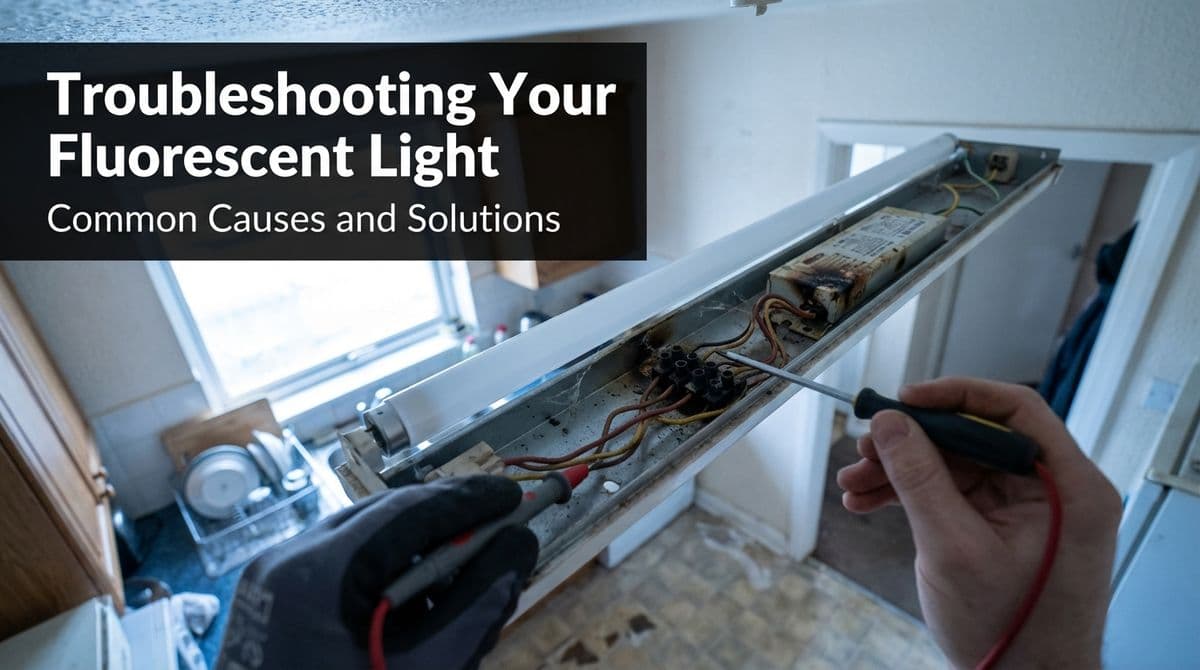
Why Your Fluorescent Ceiling Light Quit After a Bulb Change
We recently got a call from a customer — let’s call him David — who was responsible for a building with drop ceilings and old-school fluorescent T12 fixtures. One of the ceiling lights had gone completely out. He did what most people would do first: grabbed two new four-foot bulbs, popped them in, and… nothing. Still dark.
By the time David called us, he was pretty sure it wasn’t the bulbs and suspected an electrical issue. As we listened, we recognized the situation right away — the same type of problem we see all the time with older fluorescent lights: a likely ballast failure.
In this post, we’ll walk through how we think through a call like David’s, why changing the bulbs doesn’t always fix a fluorescent light, and how to tell when the ballast is the real culprit.
First Things We Ask When a Fluorescent Light Won’t Turn On
On the phone with David, we started with a few quick questions so we’d be prepared when we showed up:
- Is it a drop ceiling fixture (lay-in, 2x4, 2x2, etc.)?
- Are the lamps T12 or T8, and how long — usually four-foot?
- How many bulbs are in the fixture (two, three, or four)?
- Have you already tried new bulbs?
David told us it was a four-foot T12 fixture with two bulbs, and he had already replaced both lamps with new ones and still had no light. That’s a big clue for us that we’re likely dealing with a ballast issue, not just bad bulbs.
Knowing that ahead of time lets us bring the right replacement ballast with us, which often means we can diagnose and repair the fixture in a single trip.
Common Reasons Your Fluorescent Ceiling Light Stops Working
Before we jump straight to the ballast, it helps to understand the usual suspects when a fluorescent light won’t turn on or only works sometimes.
1. Bad or Loose Bulbs
We always start with the basics. Even new bulbs can be:
- Not fully seated in the tombstone sockets
- Defective right out of the box
- The wrong type for the ballast (T8 vs. T12, wrong wattage, etc.)
At home, you can try this:
- Turn the light switch off.
- Gently rotate each bulb 90 degrees and pull it down, then reinstall it carefully.
- Make sure the pins at each end are fully in the socket and the bulb is straight.
If a loose or mismatched bulb was the issue, you’ll usually know right away when you turn the switch back on.
2. Failing Sockets (Tombstones)
The white plastic “tombstones” at the ends of the bulbs can crack, burn, or loosen over time. Signs of bad tombstones include:
- Dark, burned, or melted-looking plastic around the socket
- Bulbs flickering when you tap the fixture
- One end of the bulb not lighting fully
Replacing tombstones involves opening the fixture and working with live wiring, so this is usually where we recommend calling in a licensed electrician.
3. Switch, Circuit, or Power Issues
Sometimes the fixture is fine — it just isn’t getting power. We routinely see:
- A bad wall switch
- A tripped breaker that won’t reset or keeps tripping
- A loose neutral or hot connection feeding the light
We test voltage at the fixture and at the switch. If power isn’t making it to the ballast, repairing the ballast won’t help until the upstream issue is fixed.
When It’s Probably the Ballast
In David’s case, he’d already tried new bulbs, checked the switch, and confirmed other lights on the same circuit were fine. That narrows it down fast. Here are signs we look for that strongly point to a bad ballast:
- New bulbs don’t light at all, or only glow faintly at the ends
- A low humming or buzzing sound that got worse over time
- Intermittent flickering before the light finally quit
- Burn marks or a melted smell coming from the ballast area
The ballast is essentially the “control box” that limits current to the fluorescent lamps. When it fails, it either stops providing enough voltage to start the lamps, or it provides inconsistent power that causes flickering and rapid bulb burnout.
Why Ballasts Often Fail in Drop-Ceiling Fixtures
Drop-ceiling fixtures like David’s are often older and run many hours a day. Over time, heat and age break down the ballast’s internal components. Common causes we see include:
- Age: Many magnetic T12 ballasts are well past their intended life span.
- Heat buildup: Poor ventilation above the ceiling tiles cooks the ballast.
- Frequent switching: On/off cycles wear the ballast faster than continuous use.
Once the ballast is gone, no amount of bulb changing will bring that light back.
How We Diagnose and Replace a Fluorescent Ballast
When we arrive on a call like David’s, we walk through a quick, safe diagnostic process:
- Confirm power at the fixture with a meter.
- Visually inspect bulbs, sockets, and wiring for damage or overheating.
- Test the ballast and wiring connections inside the fixture.
If we confirm the ballast is bad, we shut off power at the breaker, remove the old ballast, and install a new, compatible unit. In many cases we’ll upgrade from older magnetic ballasts to newer, more efficient electronic ballasts or even discuss converting the fixture to LED tubes or a flat-panel LED for lower energy use and less maintenance.
Because we asked David ahead of time about the lamp type and number of bulbs, we were able to bring the exact ballast his fixture needed and get him back up and running in one visit.
When to Call an Electrician (and When You Can DIY)
There are a few things most homeowners can safely do before calling us:
- Try fresh, matching bulbs of the correct type (T8 vs. T12, correct wattage).
- Make sure bulbs are firmly seated and rotated into place.
- Check the breaker panel for a tripped breaker.
- Try a different, known-good bulb from another working fixture.
If you’ve done those basic checks and the light still won’t come on — especially with a drop-ceiling fluorescent — it’s time to let a pro handle it. Opening fixtures, testing live voltage, and wiring a new ballast safely require proper tools, training, and code knowledge.
So if you’re in the same spot David was in — new bulbs, no light, and a dark room you rely on — we’re happy to come out, track down the real cause, and get your fluorescent (or a better replacement) shining again.